
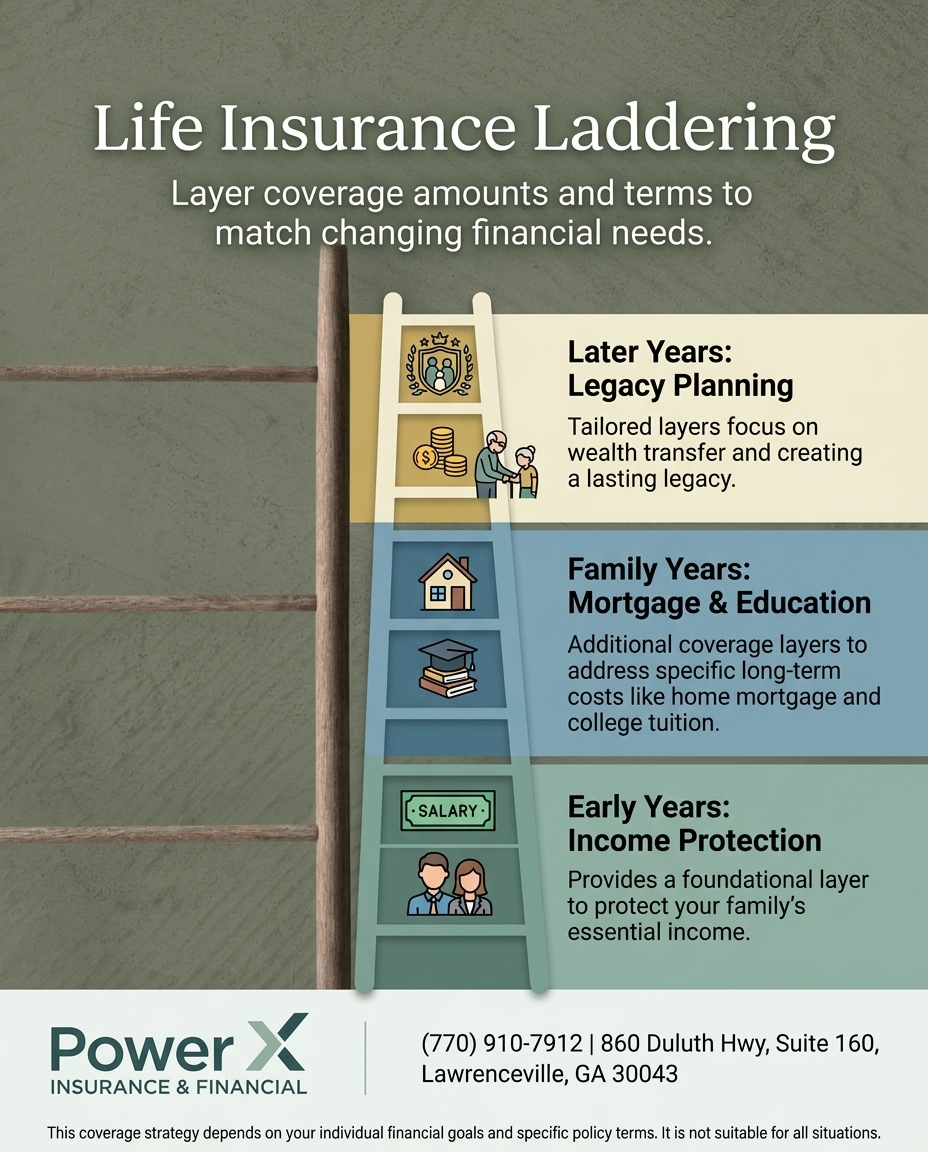
How Life Insurance Laddering Can Match Changing Needs
Life can bring new financial commitments at every stage, from purchasing a home and raising a family to paying down debt and preparing for the years ahead. As those responsibilities shift, the amount of life insurance protection a household needs may shift as well. Building coverage that reflects both current obligations and future plans can be an important part of a thoughtful financial strategy.
Life insurance laddering is one approach individuals and families may consider. Instead of relying on one large policy intended to address every possible need for decades, laddering combines multiple policies with different coverage amounts and time periods. The purpose is to provide appropriate protection for specific obligations while limiting the likelihood of paying for coverage that may no longer be necessary later.
What Does Life Insurance Laddering Mean?
Life insurance laddering involves purchasing more than one life insurance policy, with each policy carrying its own term length, coverage amount, or policy type. Each layer of coverage is selected to correspond with a distinct financial responsibility or anticipated milestone.
Rather than keeping the same high death benefit in place through every phase of life, a laddered approach allows coverage to decrease as certain obligations end. When a debt is paid or a major family expense is no longer expected, the policy connected to that responsibility may expire while other coverage remains in force.
For many households, this can create a more customized life insurance plan that recognizes changing needs without losing sight of long-term flexibility.
Aligning Insurance With Financial Milestones
A primary benefit of laddering is the ability to organize protection around changing financial priorities. Different policies can be structured to address obligations that may last for very different lengths of time.
For instance, a shorter-term policy may help provide protection for student loans or other debt accumulated early in a career. A longer-term policy may be intended to support mortgage obligations or provide financial security while children grow up and complete their education.
Instead of choosing one policy designed to account for every potential future circumstance, laddering makes it possible to assign coverage to individual responsibilities. As those responsibilities decline, total insurance protection can decline naturally as well.
Potential Cost Advantages of a Laddered Strategy
Some people explore life insurance laddering because it may help manage the cost of coverage. Shorter-term life insurance policies are often less expensive than policies with longer terms, so matching policy durations to specific obligations may help reduce spending on protection that is not needed indefinitely.
For example, if a substantial debt is expected to be eliminated within a defined period, it may not be necessary to maintain a large amount of insurance for that purpose after the debt has been paid. With laddering, coverage can step down as financial responsibilities are resolved.
Still, a laddered plan is not appropriate for every situation. While some people expect their obligations to shrink over time, others may continue to support dependents, carry debt, or have ongoing financial responsibilities. In those circumstances, reducing coverage may not match their needs.
Keeping Coverage Adaptable Through Life Changes
Financial plans seldom remain unchanged. Marriage, children, career transitions, and other major events can affect the type and amount of life insurance a person may need.
A laddered strategy can offer flexibility by allowing several policies to work together across different stages of life. Rather than replacing a single large policy whenever circumstances change, individuals can build a combination of policies that addresses both immediate needs and longer-term priorities.
This structure may make it easier to adjust overall protection as life takes a new direction without having to completely redesign a life insurance plan each time.
Using Term and Permanent Life Insurance Together
Although many life insurance laddering strategies are built mainly with term coverage, some individuals include permanent life insurance as part of their broader plan.
A smaller whole life policy may offer benefits that continue beyond temporary financial obligations. Depending on the policy, permanent coverage may provide lifetime protection, potential cash value accumulation, access to funds for retirement or emergencies, and living benefits if a serious illness occurs.
Combining term life insurance with permanent coverage can help some individuals balance cost-conscious protection for temporary obligations with longer-range financial goals.
An Example of a Life Insurance Ladder
Consider a 30-year-old with a young family who wants coverage for several different needs. Their life insurance plan could include:
- A $250,000 policy with a 10-year term to help address student loans or debt from the early years of a career.
- A $500,000 policy with a 20-year term to help protect a mortgage and provide support while children finish their education.
- A $250,000 whole life policy intended to help with final expenses and leave a financial legacy.
In this example, every policy has its own role. As shorter-term debts are paid down, the coverage associated with them may no longer be needed. The remaining policies can continue to provide protection for obligations that still exist, helping insurance align with the family’s evolving responsibilities.
Maintaining Options for the Future
Another possible advantage of laddering is the flexibility available as individual term policies approach the end of their coverage periods. Many term life insurance policies offer conversion features that may allow policyholders to convert some or all of the coverage to a permanent policy without completing another medical exam.
This option can be particularly valuable if health changes later make new coverage harder or more costly to obtain. Rather than beginning from scratch, a policyholder may have an opportunity to adjust protection based on the circumstances at that time.
Life insurance needs are rarely fixed, and having options as circumstances change can help individuals feel more prepared for what lies ahead.
Choosing an appropriate life insurance approach depends on personal financial goals, family obligations, and long-term plans. Power X Insurance & Financial helps individuals and families throughout Lawrenceville and across Georgia explore life insurance options that reflect their unique needs. As an independent insurance agency, we provide personalized guidance designed to help clients build flexible protection strategies that support their goals. Contact Power X Insurance & Financial to discuss whether life insurance laddering may fit your financial situation.